Monthly Archives: December 2015

A new year

Standard
A new year

God has greatly blessed our family this past year.  He has provided our every need and much more.  I am so thankful to have a relationship with Him, and to see our children grow in maturity with their walk with the Lord.

2016 will be a year we will rely on Him with every aspect of our lives.  To learn to truly give everything over to Him.  To watch Him perform great works and to provide us with patience, love, and comfort for the things out of our control.

2016 will be a year of Silas.  I am very anxious to meet our little guy.  I can tell he is growing so strong as his movements are getting more pronounced and take me by surprise at times.  It is still a roller coaster of emotions.  One minute I could be totally fine.  Then one of my children will do or say something that makes me think “Will Silas be able to do that?  Will he be here to enjoy…?”  The tears then start.  I am then reminded that we are not alone.  He will walk through this with us.

Next week will be a very crucial time as we will finally be meeting with specialists at Childrens Hospital of Philadelphia.  I will  undergo a day of testing and meetings with specialists.  That day will give us a direction as to how bad or good his condition is, and where we may be living during his birth and treatment.  We pray for guidance on all the decisions we will be faced with; to make decisions based on prayer and not out of fear.

Second Appointment With The MFM

Standard

December 14, 2015 (16 weeks and 4 days pregnant)

The days leading up to our second appointment with the maternal fetal medicine group were filled with anxiousness and prayers that Silas’ heart had changed/grown.  Since Silas was diagnosed at such a young age (13 weeks gestation) we were told it was too early to get a clear or complete picture of his heart.  I was ready for some answers at this point.  This is where my impatient personality comes out.  It had been three weeks of guessing the extent of the problem.  Also, we wanted to see if the Lord had decided to heal Silas.

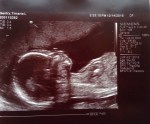
Once again, I was beyond excited to see that his little heart was still beating, and that yes, Silas was definitely a boy:)  All his body measurements were normal.  Silas was actually measuring a week ahead in some aspects. In seven prior pregnancies my children never measured ahead of schedule.

Babies with HLHS often have IUGR-Intrauterine growth restriction.  This can have a negative effect on any baby, but especially a baby with HLHS.  These babies need to be a certain weight to move along with their heart surgeries.

With low levels of HCG, I was concerned about Silas’ growth.  We saw first hand that God was still watching over our baby.  When it came to scanning the heart I could see it did not look normal.  So we sat nervously waiting for the doctor to return to go over the results.  God had still not healed Silas’ heart. His left atrium and ventricle was mostly non-existent.  The doctor thought he could see the aorta, but it was very stenotic(narrow).

A new diagnosis was that the atrial septum was intact.  This brings a new set of issues with Silas’ care before and after delivery.  I am still trying to understand this issue.  With an intact septum blood cannot flow to the left side of the heart, and that causes pulmonary pressure to build which can damage the pulmonary system.  Fetal intervention can be done in some circumstances to correct this.

Fetal intervention includes having a catheter inserted into the baby’s septum while the baby is still in the womb.  Doing this while in utero may prevent damage to the baby’s pulmonary system.  This surgery is only performed at a select few hospitals in the nation.  If fetal intervention is not an option, then delivery can take place in a catheterization lab, and the baby is immediately catheterized.  For babies born with the atrial septum intact, pulmonary blood flow increases substantially once the umbilical cord is cut.  That causes extreme pulmonary pressure.

Silas’ pulmonary artery is already significantly dilated.  The doctor also told us that he saw significant regurgitation across the tricuspid valve.  Basically, an important part of the right side of his heart is not working well.  HLHS babies bank on that right side to be strong enough to do all the work that the left side is incapable of doing.  At the time of the appointment I did not know what that diagnosis really meant, so I had no questions.  Now that I have read about it I have a ton.

Regurgitation across the tricuspid valve can be repaired if it is minor, or if it is significant, it could mean Silas will need a heart transplant.  Once again we left the office in silence, and when I got in the car the news sank in.  My baby boy is actually very ill, and unless God chooses to heal him we are in a battle for his life.  I broke down in tears at the thought of my Silas having to suffer and fight so much for life.  This blog is from my point of view and I tend to leave out Boyd’s feelings. I think this appointment made this whole situation very much a reality to both of us.  For us it is hard to move forward with all the planning that is involved without feeling like we do not have faith in God to heal.  At this appointment we realized it was time to move on with the process, and start the ball rolling with visiting a few hospitals to get opinions and to see and pray which one was a good fit for Silas.  We will relocate our family to live near the hospital we choose until he is able to come home (2 months to a year).  So, lots of decisions and planning to come.

We wanted to get an opinion from one of the top hospitals recognized at treating severe cases of HLHS – Children’s Hospital of Philadelphia (CHOP).  I had to, for my own peace of mind, to get an opinion from one of the best.  We will also get an opinion from the nearest hospital that treats HLHS-Cincinnati Children’s Hospital, which happens to be rated at #7 for their pediatric heart center.

We leave January 7th for Philadelphia.  On the 8th we will have an 8-10 hour day of testing and meetings with specialists to discuss Silas’ heart.  I am hoping to get more answers, but I am also very scared at what they will find.  We have received such overwhelming news from just ultrasounds, what are they going to find with extensive echocardiograms and fetal MRI’s?  I am reminded of the song:

“Strong Tower”

When I wander through the desert
And I’m longing for my home
All my dreams have gone astray
When I’m stranded in the valley
And I’m tired and all alone
It seems like I’ve lost my way

I go running to your mountain
Where your mercy sets me free

[chorus]
You are my strong tower
Shelter over me
Beautiful and mighty
Everlasting King
You are my strong tower
Fortress when I’m weak
Your name is true and holy
And Your face is all I seek

In the middle of my darkness
In the midst of all my fear
You’re my refuge and my hope
When the storm of life is raging
And the thunder’s all I hear
You speak softly to my soul

Please continue to pray that Silas’ heart will grow, but that the Lord’s will be done above our will.  Please pray that we have peace and reassurance in choosing a hospital that will give him the best chance to grow into an old-aged servant of God.
RESULTS ARE IN

Standard

Meeting with genetic counselor December 1, 2015

We knew the blood work would come back with high percentages for chromosomal defects.  So we were kind of prepared, or so we thought.  I had a 1 in <5 chance for Trisomy 18 or 13 and a 1 in 18 chance for Down Syndrome.  It was hard to see it on paper.  I really had my mind made up we were just dealing with a heart defect.  Now I was beginning to have doubts.  My results also showed my HCG level to be extremely low.  I then took on the stress of thinking I could miscarry and Silas would not even have a chance at life outside the womb.  All I could do was put our trust in God and continue to follow the path He had for us.  I found comfort in knowing that it was out of my hands, but in His.  I had no control over this.

I then took the maternity 21 blood test that is 94-99% accurate with results in many chromosomal syndromes including Down Syndrome and Trisomy.  We would also be able to find out the gender of our baby.  During our last four pregnancies, we were adamant about not finding out the gender.  Once again I think God was preparing me to not have another disappointment.  Before we knew Silas had anything wrong we decided to find out the gender – just for fun.  It kind of took me by surprise that both Boyd and I felt like we wanted to know the gender.  So another long week of waiting for the results of a blood test.  I am learning that this whole process is about waiting and patience; two things beyond my comfort.  When I have a problem, I tackle it head on and get it fixed right away.

That week I anxiously awaited the call with the results.  I tried not to worry and hand my cares over to God, but it was hard!  It is still hard to escape the never-ending thoughts as I feel him move, and I watch my stomach growing.  I feel so responsible for his well-being.  On December 9th we got the call. It’s a boy!!!!  (Our last three have been girls, so it will be a nice change to have a little boy running around.)  Most importantly the chromosome tests were normal.  I never thought I would feel relieved to “just” be dealing with a complex heart defect.

At this point Boyd and I never really let ourselves think to far into the future of planning Silas’ care.  We are praying still for a miracle and are waiting for that next ultrasound.   We believe that God can grow our little boy’s heart.  We had total faith that He could do it IF He chose to do it. Often when people would ask how we were doing, I would feel guilty that I was portraying that we had given up and accepted his diagnosis.  So not true.  Boyd said “We are human, he is our child, and this is happening right now.  It has nothing to do with our lack of faith.  We are parents to a child who is sick.”  If God chooses not to heal Silas, then we are Ok with that.  Of course, it makes us sad, angry, and so many other emotions, but not at God.  I do not question why this is happening.  I know there is a reason as to why this is happening, but we may not know that reason for a long time.

RESEARCH, RESEARCH, AND MORE RESEARCH

Standard

When any of my children become ill I always take to the internet and learn all I can.  The night we found out about Silas’ diagnosis I could not wait to have a quiet moment to research what HLHS really meant.  I soon found out that it was not something I would learn and be able to comprehend in a matter of an hour or even two.  I am still trying to get down the anatomy of the heart, what each part does, and how this condition will impact our little boy.  I thought I would write a brief description of what HLHS is for those who want to understand.

One thousand babies are born each year with HLHS and 2/3 of those babies are boys.

Hypoplastic Left Heart Syndromee is a severe congenital heart defect in which the left side of the heart is underdeveloped or not at all.  In a normal heart, the heart’s left side has the job of pumping oxygenated blood into the aorta, the large artery that carries blood to the body.  In a child with HLHS:

  • The mitral valve, which separates the two left chambers of the heart, is too small or completely closed(atretic)
  • The left ventricle(the lower, pumping chamber) is very small
  • The aortic valve, which separates the left ventricle and the aorta, is too small or completely closed(atretic)

In addition to the most common form of HLHS there are a number of complex conditions with variations in the structures described above.

Treatment for HLHS varies depending on each childs exact diagnosis and how that child’s body reacts to each procedure.  Typically a child with HLHS will undergo 3 reconstructive open heart surgeries to redirect the  oxygen-rich blood(red) and oxygen-poor blood(blue).  After these surgeries:

  • The right side of the heart will do what is usually the job of the left side of the heart-pumping oxygenated blood to the body.
  • The deoxygenated blood will flow from the veins to the lungs without passing through the heart.

The series of three reconstructive operations to repair HLHS-The Norwood, Glenn, and Fontan procedures-is known as staged reconstruction. http://www.chop.edu/conditions

The outlook for children with HLHS has improved dramatically. While HLHS was once uniformly fatal, our experience so far indicates that the majority of children will now reach adulthood. Some children will need other catheter-based or surgical procedures, such as a pacemaker for abnormal heart rhythms. Others may need a heart transplant. Heart function, as well as the function of other organs that may be impacted by abnormalities in the circulation, will be monitored over the long term.  Overall, it is expected that these children will have a good quality of life: have friends, play, and go to school just like other children. http://www.mottchildren.org


The Journey Begins…

Standard

Our journey with HLHS began on November 23, 2015.

On September 11, 2015 we found out we were going to have our 8th little blessing.  We were all very excited, and could not wait to add Silas to our lively family.  The beginning of the pregnancy was pretty typical of all the others, ALL DAY sickness.  It is always hard to get through those first 15 weeks and to the point of feeling the baby kick and move.

From the beginning of the pregnancy I felt things were going to be different.  I did not have fear, but thought God had something in store for this little one.  In previous pregnancies I never had genetic testing, figuring the outcome would not matter.  We would keep and love the baby no matter what.  This time when we had the option to have the Nuchal Translucency test done I told Boyd for some reason I feel we need to do this.  The tests include a level two ultrasound to measure the anatomy of the baby, especially the fluid in the neck, and a blood draw.  These two tests combined then give a percentage of the probabilities of Down Syndrome or a Congenital Heart Defect.  He thought I would just worry myself over any little issue they would find.  In the past every pregnancy has presented a challenge, but never had any major effect on the baby.  In the end we decided to have the tests.  Why not?  It would at least prepare us for having a baby with special needs, if that is what the tests conclude.  Also, I am 40 now, and although that is a young age to have a baby today, I knew my chances were higher for certain syndromes.

The day after we got back from an amazing two week trip to Cancun, Mexico we went to have the test done.  I was 13 weeks and 6 days – the last day to have the test performed.  We were both excited to see a growing baby with a beating heart.  He had perfect little hands and feet.  As the ultrasound tech was scanning Silas, I knew the nuchal fold was measuring high.  When she was done, she said the Maternal Fetal Medicine (MFM) doctor would be in to discuss the results.  I immediately looked over at Boyd and said “We are going to get some news on the baby that is not going to be good”.  Twenty minutes later, three people returned to our room.

The doctor, tech, and genetic counselor all had that look that they had something important to tell us.  The doctor began to explain that Silas was still young, but he could see a major heart defect.  The left side of his heart was not visible.  He called it Hypoplastic Left Heart Syndrome: A very rare and severe congenital heart defect that is one of the most complex.

Each child with this syndrome is different, and many other complications of the heart can also go along with HLHS.  There is no cure, but so many advances in medicine have been made to give these little babies a chance at life.  Thirty years ago, there was little that could be done for these children but to provide comfort care.  They still offer that option and also termination.  The doctor asked how we wanted to proceed.  Of course, we wanted to give this baby a chance at life, and we would do whatever it took to do that.

The doctor gave us hope in saying these children have a very rough road, but that they can grow up to live active lives.  Treatment for this condition is a set of three open heart surgeries or a heart transplant.  The first surgery would be within days of birth, the second at around six months, and the third at 2-3 years.  Several other smaller surgeries can be necessary.  It all depends on the child and how severe his condition is, and we won’t know that for several weeks.  These babies become immediately sick as soon as the cord is cut.  We were also told that we would not be able to deliver at the local hospitals.  We would need to go to a children’s hospital that has a special cardiac center.

Thankfully we live just an hour and a half away from one of the top 10 pediatric cardiac hospitals in the nation-Cincinnati Children’s Hospital.  I was also told to relocate closer to one of those hospitals several weeks before birth to ensure that Silas can receive immediate care.  I have fast labors and have often delivered early.  I have had births as early as 34 weeks.

The doctor also found the nuchal fold was at 4.8mm – it should be around 2mm.   The doctor felt that it was thick due to the heart defect and not a chromosomal issue since nothing else on the ultrasound pointed in that direction.  The heart does not fully develop until 20 weeks, and until then we would know the severity of the defect.

We were then introduced to a genetic counselor.  She explained the blood test, but we were kind of in a zombie state of mind.  She told us to expect very high percentages that would indicate a chromosomal issue, but that did not mean this was a chromosomal issue like Down Syndrome or Trisomy.  She said a lot of congenital heart defects are just a “fluke”.  Of course, my first question was “Did I do something that caused this?”  She assured me that since I was not on any medicines that it was just something that happened.  We were to receive the blood results in a week, and then get a second specialized blood test that would give a 95-99% accuracy for identifying chromosomal conditions.  I did not want to risk doing an amnio so this was the next best thing.  We were also to return in three weeks to get another ultrasound scan to see how the heart was doing.

We walked out into the hallway in silence.  This was a huge shock and enormous amount of information to take in in a matter of three hours.  Boyd turned to me and hugged me, that is when I completely broke down.  Our minds were racing.  I felt like my world had just been crushed.  All we could do is turn to our Savior and begin to pray for a miracle for our little baby. He already gave us one miracle: Impressing me to get this testing done.  If we did not know about this condition at birth, our precious Silas would not have the best chance at surviving.   I tried to pull myself together for when I walked through the door and faced my other children.  The older ones could obviously tell I had been crying, crying a lot.  They were pretty silent while the younger ones came running like they had not seen us in days.  I could not keep it together and continued to cry which confused them.  The older ones were too afraid to ask what was wrong.  We sat down at dinner and tried to explain something we did not quite understand ourselves in a delicate manner.  This is where our journey with HLHS began.